Showing posts with label Exercise Equipment. Show all posts

Tuesday, January 20, 2015

Frugal Yoga: Getting Started

So, between January cloudy skies and being diagnosed with arthritis, I decided I had to do something to get my groove back.  I've experienced a lot of different types of exercise in my life, and in light of everything going on in my life, I decided to get back into yoga.  

Why yoga? First of all, yoga has been practiced by a variety of people over thousands of years.  No one has died from too much yoga, to my knowledge.  I believe it helped me when I had done it before, and in general: if people keep doing yoga, yoga obviously does something for people.  

Secondly, I know for a fact that aches and pains lessen with yoga (and most mild exercises, in general).  Regular exercise is shown to help reverse joint stiffness, as well as build up muscle and promote normal joint movement.  This means you become stronger and don't suffer fatigue as fast, which makes for more active and productive days.  

Thirdly, yoga is cheap.  Don't think so?  Then you've read too much yoga-hype and haven't looked around your house or your community.  Any expense from yoga is in one of three areas - classes/retreats/dues and educational material, clothing, or gear, and every one of those can be done for free or close to if you try hard enough.  

Classes CAN get up to $20-30 a pop, but free or affordable community yoga classes are often also available.  Check with your local yoga schools/gyms, libraries, or community centers.  I started doing yoga because a class was offered for free by my work.  Yours doesn't do that? I highly recommend you recommend something similar to your boss, as a morning yoga really does improve the rest of your day's productivity.  Usually you can find at least a 'free first class' with no obligation for a Yoga class series, which helps you figure out some basics.  If you have friends also interested in yoga, pool together a few bucks to afford an instructor to teach the group in someone's basement.  Otherwise, you can get online guides, videos and tutorials from the internet for nothing.  Go to your local library and check out their yoga books and DVD's.  There are quite a few free apps for phones, too, with poses and insight.  You will more than likely be able to make a routine for yourself and get to try new things.

*Update:  Check out these free yoga lesson videos / sites compiled by freebies.about.com.  I like how some of them are super-sortable - by time, types, and experience level.  

And how does one go on a yoga retreat for nothing, you ask?  Easy.  First, clean your house.  Declutter at least the area you yoga in.  The less stuff in the area, the more restful your eyes are.  For music in the background of your sessions, go to a music site like Grooveshark.com, and look for "yoga", "relaxation", "meditation", or "nature music".  Or, for some fresh takes on meditation music, look up artists like DJ Drez, Thievery Corporation, Lykke Li, or Desert Dwellers.  Just play music from your phone (placed in a glass bowl if you need it to be louder) or exercise near the computer.  Want some appealing scents?  Skip incense and candles (too smoky) and consider getting crafty by making aroma goodies like potpourri, Homemade Gel Air Freshners, or scentsy-styled heated aromas.  Keep the lighting low and make it uplighting if you can.  Want a really cool lighting effect  Hang a white sheet on the wall so it reaches the floor, and stick a lamp behind it so the light goes up the wall and is diffused with the sheet.  Put images of nature or natural things on the walls to look at while you breath, as it has been shown even looking at a picture of nature creates a sense of calm in humans.  Clip these from outdoor magazines, or look for posters at the thrift shop.  If you have any potted plants, move then to where you yoga.  Take any mirrors you can move and lean them against the walls / hang them in the area.  

The second cost, workout clothing, should NOT set you back $50 for a pair of pants.  I did my yoga in a pair of stretchy thin cotton pajama bottoms that cost my $0.80 at the thrift store - I went on Dollar Clothing Tag Day and had a 20% coupon, naturally.  I do recommend you find your pants in black (you are working out, after all, and should sweat a bit.)  Tank tops or sports bras are fine for covering your torso, so long as you can stretch out in it and not flash anybody.  Just make sure your clothing isn't too baggy, so (if in class or if looking in mirror) your actual body outline can be seen, to make sure you have proper alignment.

And the third cost, equipment, is the most over-inflated of them all.  You don't need a $30 starter kit with mats, blocks, and straps.  All you NEED for yoga is some comfortable open floor space.  Seriously.   All the yoga-related “stuff” you can get helps promote comfort and variety while exercising, but aren't required for most basic yoga.  If you really want to have all the stuff to perform all the moves, it is possible to make things work in place of the store bought item, like using a towel instead of a mat, or a bathrobe belt instead of yoga belt.  Assuming you have an average household of stuff, I realized you could make-shift most yoga equipment for a grand total of $0.33.  If you have a tennis ball floating around already, you could make-shift it all for free.  Don't believe me?  Check out my post on it here. 

So, since I can't seem to sleep past 5am lately, I'm going to start my own Frugal Yoga style, and save myself from stiffness and stress.  I'll post patterns, positions, and success rates as I do this.  It's all about motivation, really.  

Here are some other tips for anyone else wanting to get into yoga but not sure where to start: 
  • Take one class before committing to any series of classes - usually the first one is the 'free' hook, and will let you know if you like it.
  • Take a friend or spouse with you if possible – exercising with a partner motivates you to keep up with it.
  • Call ahead before a first class to see if you need to bring anything - mat, belts, etc.
  • Make sure to bring a water bottle.
  • You will probably feel relaxed but energized afterword - try plan the time of yoga to make use of that feeling.  
  • If you do yoga at home, set it for when you aren't likely to be distracted by anyone or anything making noise/needing your attention.
If you are arthritic or have some difficulty moving:
  • Consider gentle or restorative forms of yoga like Iyengar, rather than more active Bikram, Astanga, or power yoga.
  • Avoid poses that involve balancing on one foot, like the tree pose, or bending the knee more than 90 degrees, like the frog pose. Modify these poses to fit your flexibility limitations.
  • Do 60 percent of what you feel capable of doing at first, and then build up the degree of stretching or speed.
  • Find an instructor/source that offers ways to modify poses.
  • Have blocks or other props to assist with modifications.

Frugal Yoga: Props for Free!

With all that crazy yoga equipment out there, it must cost a fortune to have everything you need, right?  WRONG.  Using items found around the typical house, I found there are free alternatives to just about all the yoga "stuff" they've thought up.  See for yourself!


Yoga Mat:
Store Bought: Alternative: Used, Shelf Liner, Towel and Tablecloth
$7-30 $4 used,
or
$5 Shelf Liner (20”x6'x1/2”)
or
Free w/reuse of towel and vinyl tablecloth material
The mat serves 2 purposes – light padding and anti-slippage, so just make sure your flooring/mat/homemade collection of materials do that for you. If you are JUST STARTING yoga, I recommend you take a few large towels stacked up or a smooth blanket (not the one with denim pockets) and fold it so it is 5-6' long and shoulder width (about 2'). If you find slipping to be an issue on this, grab a 'sticky' vinyl tablecloth to overlay, or roll a wide length of shelf liner over top.
I did buy a mat new, 5 years ago, and I do recommend you get a commercial mat AFTER you tried yoga at a class or performed to some videos so you know you want to continue. I bought my mat on sale for $7 new (from Target, approx 1/4” thick), and it has held up well to light-moderate use. You may find them used in various condition at thrift stores, but often they want almost as much for them used as new (note: for 2nd hand mats, make sure to unroll it to and look for undue wear before buying.) For these commercial mats, there is a good article on how to naturally clean them here. You should clean them once every couple of sessions, and make sure to store them out of direct sunlight. Alternatives to the commercial mats exist. Some people simply use a roll of really thick shelf liner, like Duck 20" x 6' Select Easy Liner, which costs about $4.74. For harder floors, place a towel under the mat if you can't find shelf liner thick enough.

Yoga Bag (for Yoga Mat)
Store Bought New: Alternative: Camping Chair Bag or Pant Leg Case
$10-40 Free w/reuse of item on hand
or
Free w/reuse of worn out pants (plus sewing)
or
$1-2 for a pair of pants to sew up
Carrying around a rolled up piece of foam is awkward, so having something with a strap to throw it over your shoulder is convenient when traveling to yoga practice. We have camping fold-up chairs permanently set up on our little patio stoop, so I just stole the cheap draw-string bag that one of them came in. It's a bit longer than my mat, but that means I can shove in belts, clothes, or other items from a workout. Feeling craftier? A fun basic tutorial for using a pants leg to make the bag. 


Yoga Blocks:
Store Bought New: Alternative: Woodblock, Paperback Block, Books
$12.00 $3 in wood plus woodworking
or
$1.30, with 5/$1 paperbacks, plus .30 cents in duct tape
or
Free w/reuse of books
These chunks of foam aren't needed, but they come in handy for the beginner. They help you hold poses longer, conserving strength so you can go longer. They help set proper alignment and modify poses to make them a little easier (such as bringing the ground up to you so you don't have to stretch so far) and they can prevent injury by preventing movement, like your knees/hips rotating too far. Making your own is simple enough, as you can sand a piece of wood in 6”x9”x4” proportions. For those without woodworking materials or inclination, or those needing a lighter block, I recommend the paperback block. Trade paper back books of ill-repute (romance novels) that are approx 6x9 or the standard paperback of 4-1/4″ x 7″ should be collected/found. Pile 6x9 books 4” tall (or just 3” high for those with smaller hands,) and any 4-1/4”x7” standard paperbacks to 9” tall stacks. These you can wrap together permanently with duct tape, or if you want to read them again, have them cinch-belted together. Or, you can use any appropriate sized book on its own (just make sure if you have a 'block' under each hand, they are the same height to promote even alignment.) No crappy novels on hand? If you come across some large chunks of styrofoam, these can be cut to the same magic sizes and covered with duct tape. Otherwise, cut cardboard rectangles 6"x 9" until your pile is about 3-4” tall. Glue them together, then wrap in duct tape. Warning: cats see these as scratching posts in gift wrap, so keep them out of sight when not in use if you have feline company.

Wrist Supports / Wedges:
Store Bought Alternative: Tennis Ball, Rolled Edge, Sanded Baseboard
$15.00 $0.33 Tennis ball
or
Free if you just roll your mat
or
$3.00/ft or less baseboard trim plus woodworking
The wedge’s curve or incline lessens the degree your wrist will need to bend; it brings the floor closer to your hands in the pose. A yoga wedge is approx. 20” long, 1-2” tall and 6.5” wide, and wrist wedges are the same, only approx 5-6” long each (and you use 2 at a time.) A yoga wedge can be made out of wood or firm, scratch-resistant foam. Smooth a piece of molding that approximates the wedge dimensions, and finish it. Those with weak wrists but no woodworking skills should try a tennis ball cut in half, which can have the same effect. Here's a good video for using wrist wedges. In the video, she also suggests rolling the edge of the yoga mat to achieve the same support/reminder as from wedges.  Super simple, and free.

Yoga Straps:
Store Bought: Alternative: Ties/belts, Obi, Bathrobe Belt
$7-15 $0.50-$4 used ties/belts plus sewing
or
$2 used judo gi obi
or
Free w/reuse of bathrobe belt
A yoga strap is used to force alignment, assist in holding limbs in place, and allow poses where maybe you can't quite touch your hands behind your back. This is a nice overview on using straps here.  Now, a typical strap is 1.5" wide and 6', 8', or 10' wide. Judo gi belts (as in, black belt, or green belt) are called obi, and are made of tough cotton with stitching run through them. You may find them in random colors at thrift stores. They will range in length from barely 5' (kids obi) to 8' or more, depending on the size of person who originally got it (the obi is made to wrap around the waist twice, plus 95cm to make a knot). If Judo isn't big in your area, find 2 men's ties and sew together for one long piece of material, or find some canvas/soft belts with the D buckles and sew them together. Wait for a thrift store half of sale, and it shouldn't set you back more than $4. Rummage sale for ugly ties, and it shouldn't set you back more than $0.50. If you really don't want to spend anything, just steal the belt of your (or your S.O.'s) bathrobe. Replace it before they catch you, though. :)

Yoga Bolster:
Store Bought: Alternative: Sewn Bolster w/Stuffing, Blankets, Towels, Lg Throw Pillows
$30-80 Free w/reuse of old blanket
or
$3-12 cloth material plus sewing and $3-12 in used blankets
or
$2-6 stiff/firm used decorative pillows
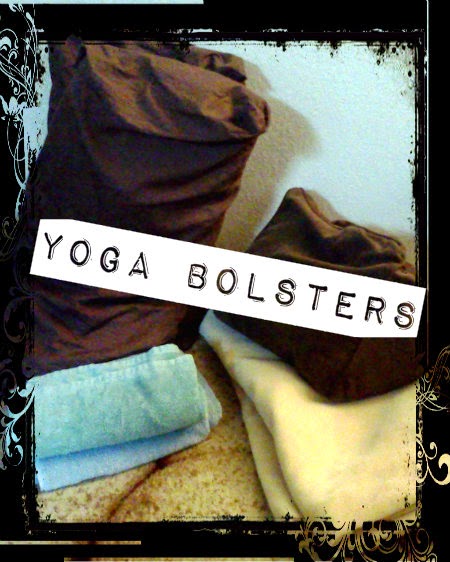
A yoga bolster is firm padding that is meant to be supportive and firm but soft, to aid you in various poses. A bought bolster – say that 5 times fast!- will set you back anywhere from $30-80 bucks. It is essentially padding, and they found in a variety of size, shapes, and 'firmness'. Finding a soft, thick- material blanket (like the old wool ones) is all you need to make a bolster for yourself – just fold it into quarters, fold that in half and roll up, and take a second blanket folded into quarters and fold around it in 'business tri-fold of paper' fashion. Or just roll it up to whatever dimensions you need. Towels can be used the same way. Want something more permanent? Roll up some not-so-great thrift store blankets and stuff them in this 'bolster' pillow case – instructions here. Another not-so standard item I require now for yoga is a pillow, for my knees. You can use a blanket for that, too, or a larger decorative throw pillow. The really well packed ones can still be found in thrift stores for a couple of bucks, and a few of those can be used together as bolster fill-ins for some positions, too.

Eye Masks:
Store Bought: Alternative: Sewn Rice Mask, Rice Baggie in a Tie, Rice Sock
$4-15 $1 in material scraps, plus sewing and $0.05 rice
or
$1 scrap tie, $0.05 baggie and $0.05 rice
or
Free w/reuse of sock, and $0.05 rice

I hadn't even heard about these until writing this article, but it makes sense. Eye masks are used as a sort of 'sensory deprivation/focus' tool when lying stretched out to relax (called savasana=corpse pose.) They block light and allow pressure gently around the eyes/brow/sinus region. There a lot of people with 'make your own' tutorials online, usually involving some scrap soft cloth and rice sewn into an figure 8 shape or rectangle. I think I will try putting rice in a gallon Ziploc bag, rolling it thin and shoving it inside a soft cotton men's tie. Otherwise, just grab a tall sock without holes, fill it with a small amount of rice, and tie one end shut.